
WHAT WE DO


We partner with districts, school leaders, and CBO’s to strengthen college and career advising systems through data strategy, systems audits, implementation support, and practical tools.
Building Systems That Don't Let Students Fall Through
We help schools and districts move from heroic individual effort to aligned postsecondary advising that works for every student.
Postsecondary
Advising
Fellowship
*Two years with a national cohort advocating for real change.
*Systems change centered around strategic partnerships and student voice.
Professional
Development
*Postsecondary advising training built for counselors, college advisors, and career coaches.
*Practical college and career advising tools, ready Monday.
Postsecondary
Audit
*Your district's postsecondary baseline, no research department needed.
*Find where students fall through the cracks.
Accepting Applications Now
-
Accepting Applications Now -
The National Postsecondary Advising Fellowship
The National Postsecondary Advising Fellowship is a two-year, cohort-based fellowship for school counselors, college advisors, career coaches, and community partners who lead postsecondary planning in K-12. Fellows build a project that changes how their school or district supports first-generation students and students furthest from opportunity, then present it at a national summit.
Your graduate program probably didn't teach this. That's not on you.
Most counselors and advisors tell us the same thing: there was not one course on college or career advising in my program. You learned on the job, often alone. Meanwhile, school led PD days are often planned for teachers, and the postsecondary part of your work is treated as an afterthought.
The Fellowship was built for that gap. Not adapted from teacher PD. Not mental health PD with a college slide. Career counseling adapted for today’s rapidly changing landscape; built for the people who lead postsecondary planning.
What you get
A team that does exactly what you do. A national cohort that meets monthly for two years. No more feeling like you're on an island.
Protected time to think. Structured time to research, refine, and expand your ideas, with coaching from Center NOVA.
A project that's yours. You design and lead a postsecondary project in your own school or district.
Data you can show. You leave with an impact story built on data, ready for your principal and school board. No research department required.
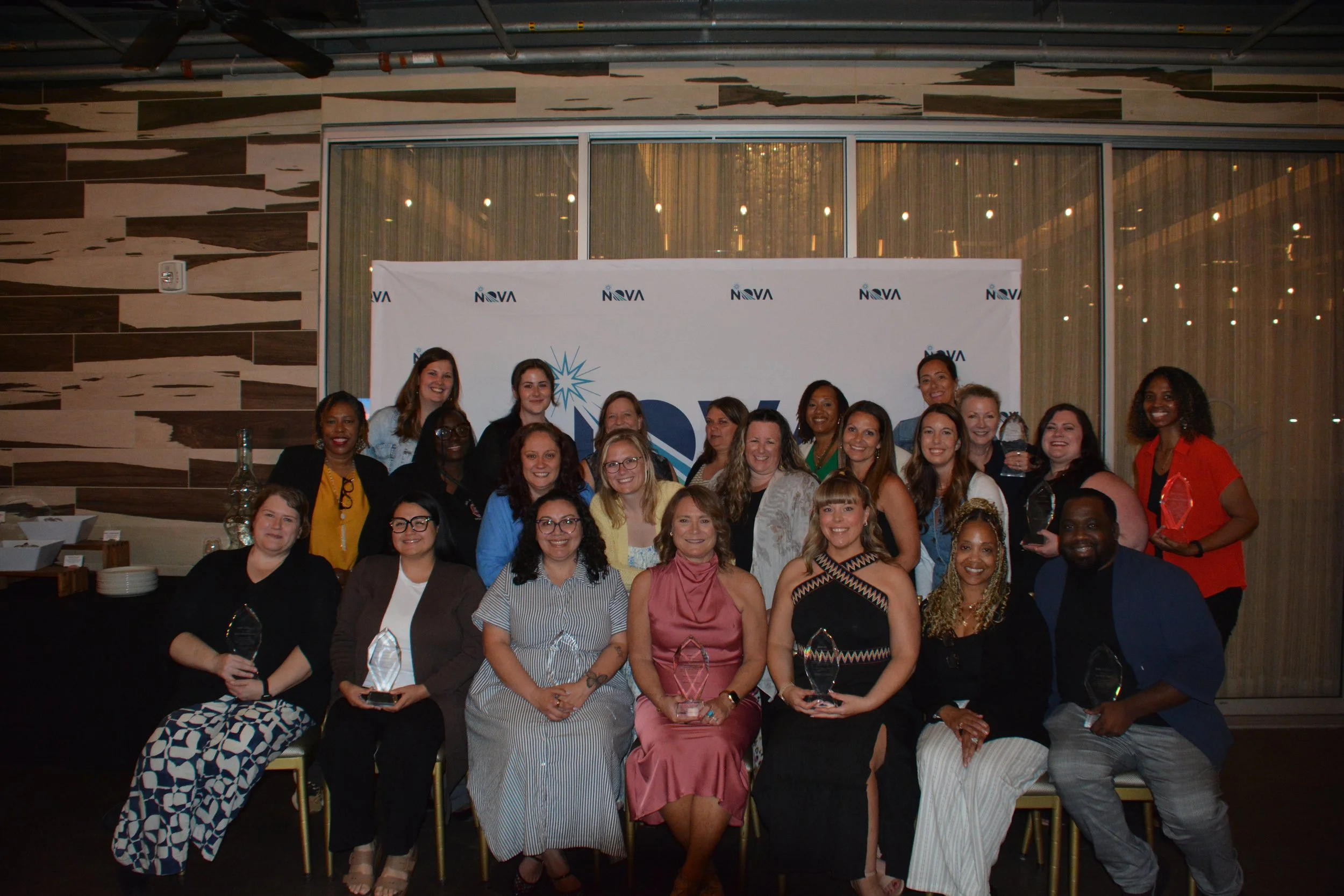
A voice for your profession. Fellows present their work to funders and peers at the in-person summit at the end of year two.
Project funding. Current and alumni fellows can pitch their projects to funders. In 2025-26, fellows received more than $35,000 in project funding from Kresge, Equitable, and Scholars Equity Network.
How it works
Year one: monthly cohort sessions, coaching, and the Postsecondary Advising Audit of your own setting.
Year two: you implement your project, track results, and prepare your findings.
Summit: fellows present findings in person. Travel support of up to $1,000 per fellow is included, reimbursed against receipts.
Investment
$2,500 per year ($5,000 over two years), billed annually. Seats are paid by districts, schools, community organizations, or sponsors. Funder-sponsored seats are also available.
"My district won't pay." We hear you.
You should not have to argue for your own growth alone. When you apply, you get a one-page Sponsor My Seat packet written for your principal or superintendent. It explains the return to the district in their terms. Center NOVA will also brief your administrator directly, and brief them again if your principal changes.
What our fellows are saying
Center NOVA's team has run school counselor fellowships for six years, including six cohorts of the MCAN School Counselor Fellows in Michigan and four years of the National School Counselor Fellows.
"The school counselor fellowship is BY FAR the BEST professional development I have done in my 22-year career in education." Jenny Riha, Jenison High School
"I have found a voice for my profession that I did not have prior to this program." Rebekah Ward
Frequently asked questions
Who can apply? Anyone leading postsecondary planning in K-12: school counselors, college advisors, career coaches, and community-based organization staff.
Is year two required? Yes. Year two is when your project produces results and you present them at the summit.
Do I need access to data? No. You'll learn a simple data routine that works without a research department.
Can a funder sponsor seats? Yes. Sponsors are named in the summit program and recognized at the celebration ceremony.
When does the next cohort start? November 2027
Professional Development
Center NOVA's professional development series trains the people who lead college and career advising in K-12: school counselors, college advisors, career coaches, and their leaders. Every session is built for postsecondary work with first-generation students and students furthest from opportunity, and every session ends with something your team can use Monday morning.
College and Career counselors, advisors, and coaches are often the last ones thought of when PD is planned
Counselors often sit through PD designed for teachers. When they do get their own sessions, the topic is almost never postsecondary advising, even though that is the part of the job most graduate programs skipped. The result is a team that wants to do this well and has been given no recommendations on how.
What makes this different
Built for counselors and advisors. No teacher PD with a counseling slide added.
College, career, and workforce together. Postsecondary means every path, not college alone.
Grounded in research and student voice. Content draws on two decades of peer-reviewed research and what students have told us they need.
Practical, not theoretical. Specifics your team can apply, not theories with no instructions.
Fits your mandates. Sessions map to the state requirements your district already has to meet, such as FAFSA completion and graduation planning.
Topics Include
AI in Advising; Connecting the Advising System; Career and Non-Degree Pathways; Populations and Equity; Rural Advising; and Foundations and Family Engagement.
Formats
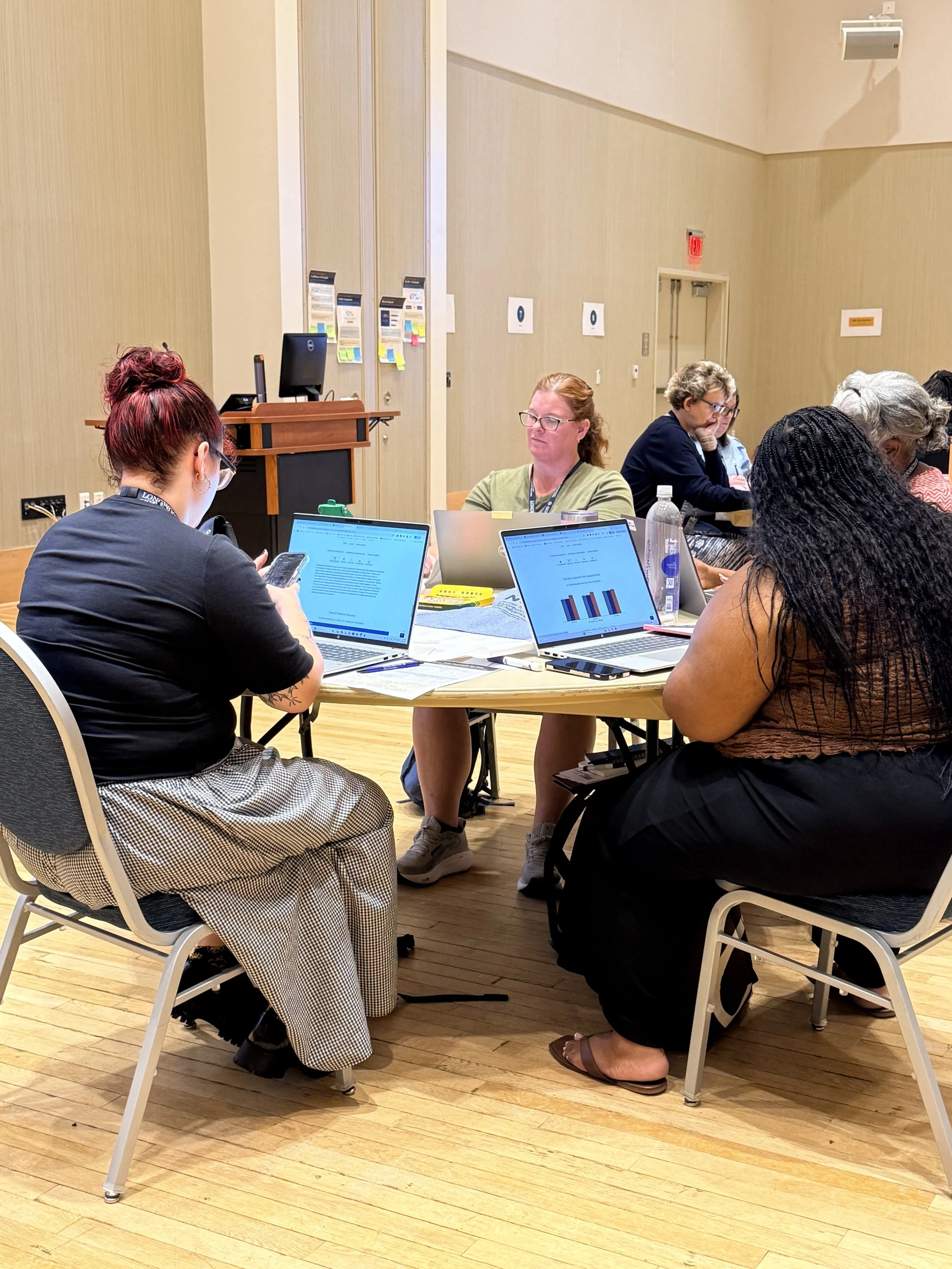
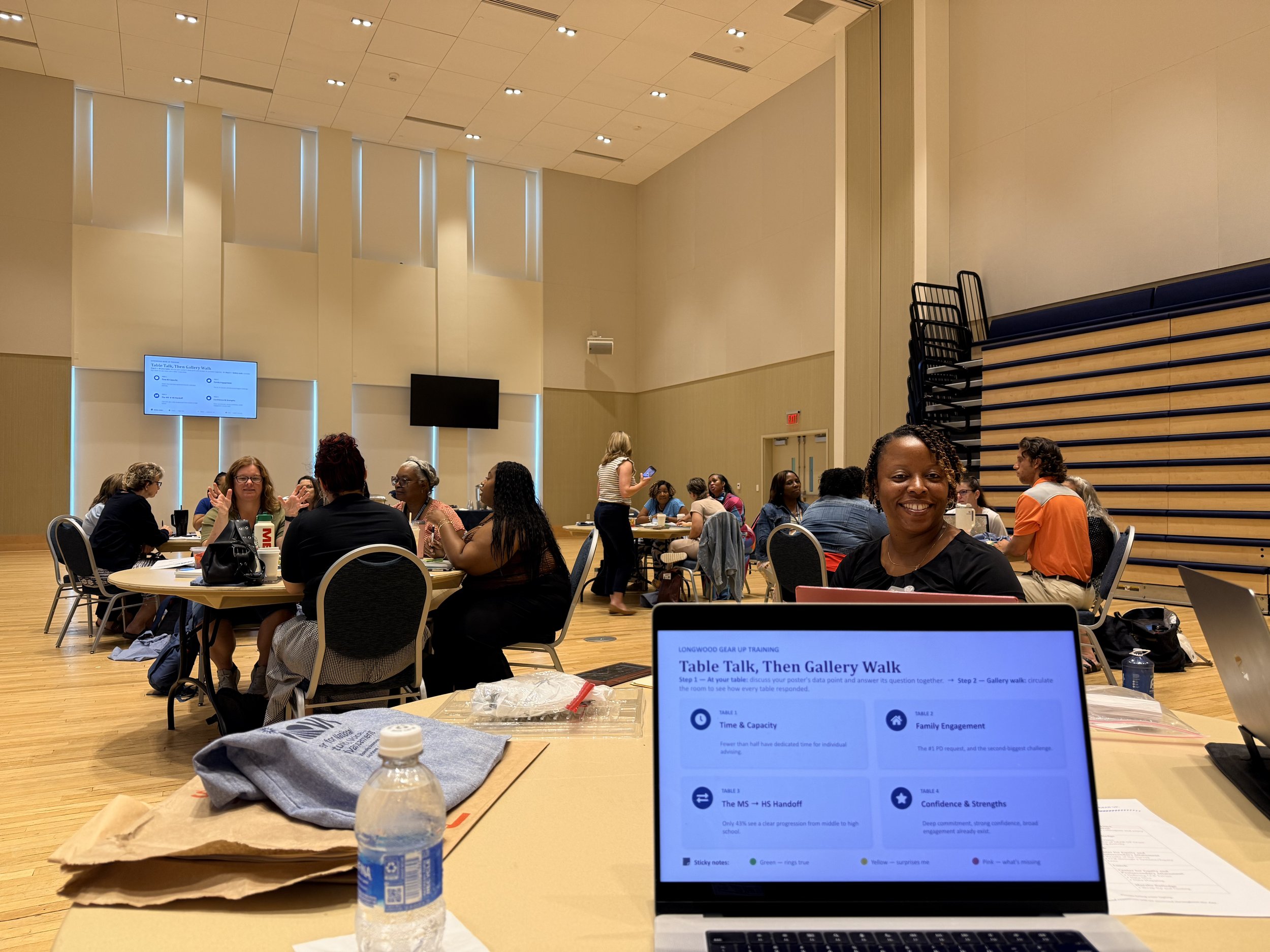
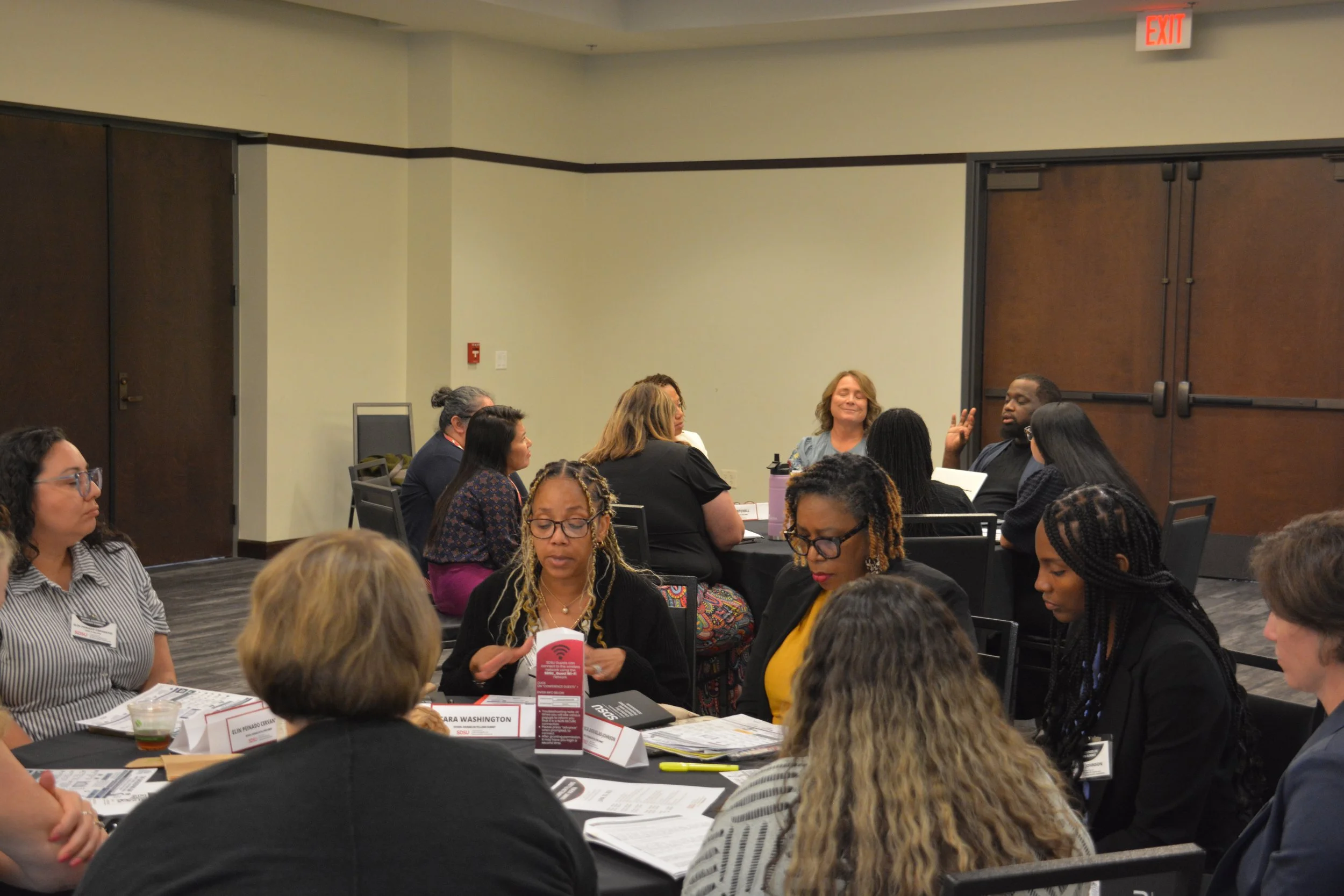
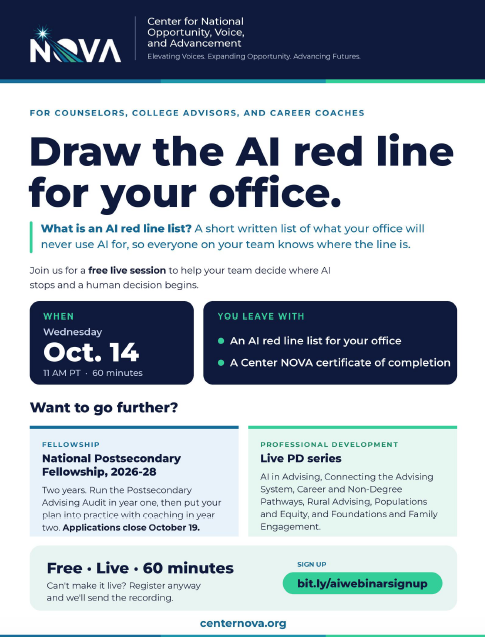
Live, online webinars led by the Center NOVA team. Join a single session or follow a full series, and receive a Center NOVA certificate of completion when you attend live.
Frequently asked questions
Who should attend? Anyone in your district who leads postsecondary planning: counselors, college and career advisors, career coaches, and counseling leaders.
Can you customize the series? Yes
How does this connect to the Fellowship and the Audit? Many districts start with the Audit to find the gaps, use the PD series to build team-wide skills, and sponsor Fellows to lead the work.
Register for this FREE webinar to learn more
From Insight to Implementation
Six steps we use with district teams to strengthen college and career advising systems.
1
Review postsecondary
+ CCR data
to surface patterns and priority gaps
2
Map the advising
ecosystem
(roles, partners, touchpoints) and
pinpoint breakdowns
3
Name one priority system
problem
and set a measurable aim
4
Design shared routines
that strengthen coordination
across roles and departments
5
Build an action plan for
implementation
(owners, timelines, measures)—
not just recommendations
6
Package results into tools +
a narrative
that strengthen coordination
across roles and departments
Let’s identify one priority system challenge and build routines, tools, and measures your team can carry forward.
The Postsecondary Advising Audit
The Postsecondary Advising Audit shows a school or district where students fall through the cracks between high school, college, and career, and what to fix first. It produces your first postsecondary baseline, even if your district has no research department and doesn't collect postsecondary data today.
"We don't collect that data" is where we start, not a reason to wait
Most districts can't say what happens to students after graduation. Counselors can't prove their impact, so they can't win the case for time, staff, or funding. The Audit breaks that cycle by building a baseline from what you already have.
What the Audit looks at
Roles and time: who does postsecondary advising, and how much of their time goes to it versus non-counseling duties
Touch points: where are students connected to postsecondary supports? What does a touch point include?
Every path: college, career, and workforce advising, not college alone
Key milestones: FAFSA completion, graduation planning, applications, and enrollment
Handoffs: what happens to students between graduation and their next step
Data and tools: what you collect, what you could collect, and whether your college and career platform is supporting the work
Leadership support: whether administrators understand and protect the postsecondary role
What you get
A postsecondary baseline for your school or district
A plain-language report your principal and board can act on
The top three gaps to close first, ranked
A data routine your team can keep running without a research department
Why it matters now
States are passing laws that expand access to counselors and career navigation, but very few set quality standards for the advising students actually receive. The Audit gives your district a quality standard before one is handed to you.
The platform isn't the system
Your district may already pay for a college and career platform. The Audit shows whether people have the time, training, and support to use it well, so the investment pays off.
Pricing
Reach out for pricing
Frequently asked questions
How long does it take? Varies - typically 6 months to 1 year
What do we need to provide? data and partner lists
What happens after the Audit? Districts can continue with the advisory retainer, the professional development series, or sponsored Fellows who lead the work.